
Working out the worksheets
A bit of a work in progress...

In 2022, I worked with a teacher (the fabulous Sue Cunich!) who introduced me to Targeting Early Numeracy (TENs) games. As an experienced educator, she took what was effective from that resource and implemented it, seamlessly differentiating the activities and using a gradual release of responsibility model. While TEN has been found to have null results (in part due to oversight changes while attempting to evaluate its intervention). It took me about 2 terms to feel confident and comfortable with the small range of activities and the model of implementation, even with significant and ongoing support from Sue.
At the same time, I was discovering cognitive load theory and its classroom implications, and studying my Masters of Education at La Trobe with Pam Snow and Tanya Serry. Over time, I started to recognise why the techniques Sue taught me were effective:
The set size was limited. For example, we might work on 2x tables for a week. Set size crops up again and again (see bite-sized practice) in maths fluency research.
Routines. I taught the routines for participation and set up materials for fast engagement (using maths kits shared between partners). See Peps McCrea for more on why this matters.
Gradual Release of Responsibility. On Monday, we practised whole class. On Tuesday, we practised whole class and then in pairs. On Wednesday and Thursday, we practised briefly whole class with less scaffolding each time and then students worked in pairs. On Friday, students went straight to independent practice.
I understand why educators who have been around for a long time talk about how every program or initiative has some elements which work and to never throw the baby out with the bathwater.
Throughout 2023-2024 I experimented with adjustments to these games and carefully observed the results with the classes I taught (Year 5/6 and Year 2), while also looking at how Daily Reviews could incorporate fluency. I followed everything I could from Brian Poncy, David Morkunas, Toni Hatten-Roberts, ThinkForwardEducators (so many webinars worth watching!), Anna Stokke, Samantha Charlton, Martin Ravindran, the WhatWorksBest maths conferences at Templestowe and more, each influencing my perspective on maths fluency (fact and procedural) and leading to consistent developments in my thinking and practice.
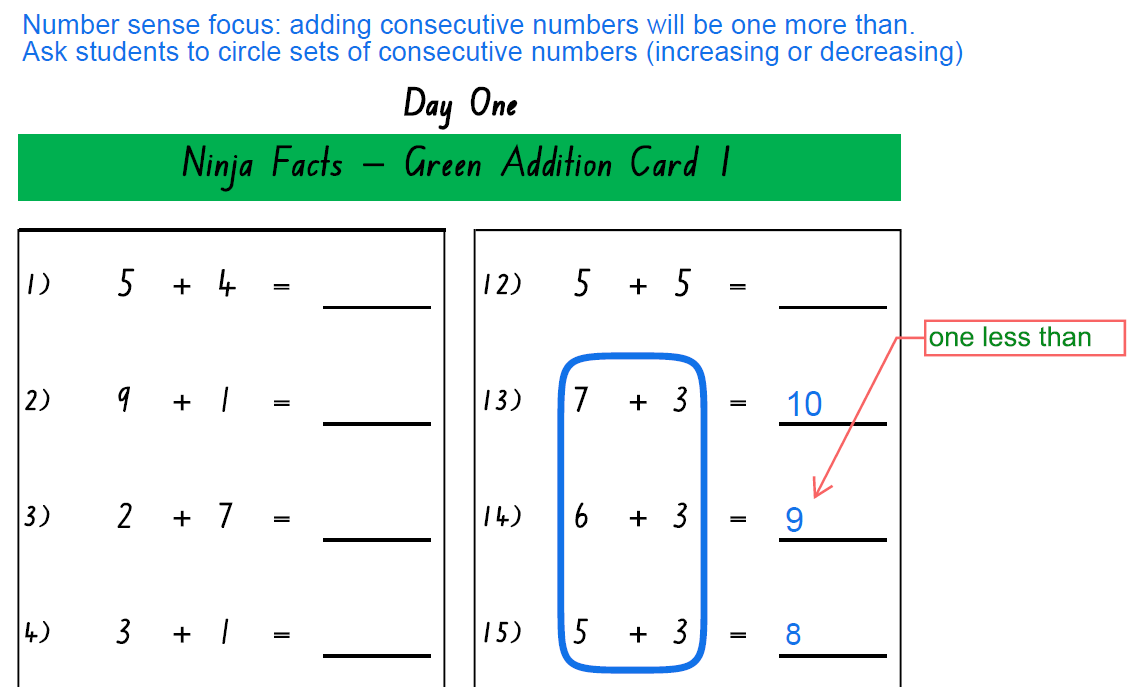
In Term 1 this year, I unleashed my current thinking into annotations for each and every Maths Ninja operation sheet (also discussed in ‘What’s the hierarchy?’):
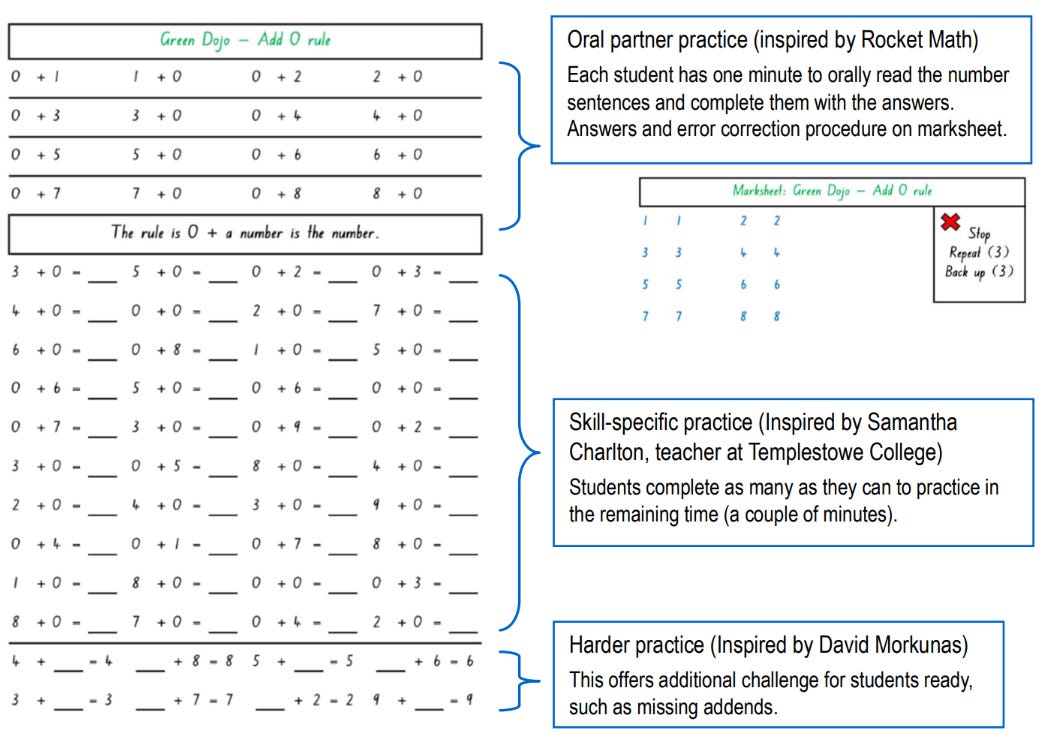
Then I recognised that perhaps not every teacher would feel confident to immediately implement this in a teaching sequence, nor necessarily provide differentiated practice for each student. So I created consistent worksheets for teachers to use:
Then I took it a step further, and created Row 1, Row 2 and Row 3 ladders to support differentiation:
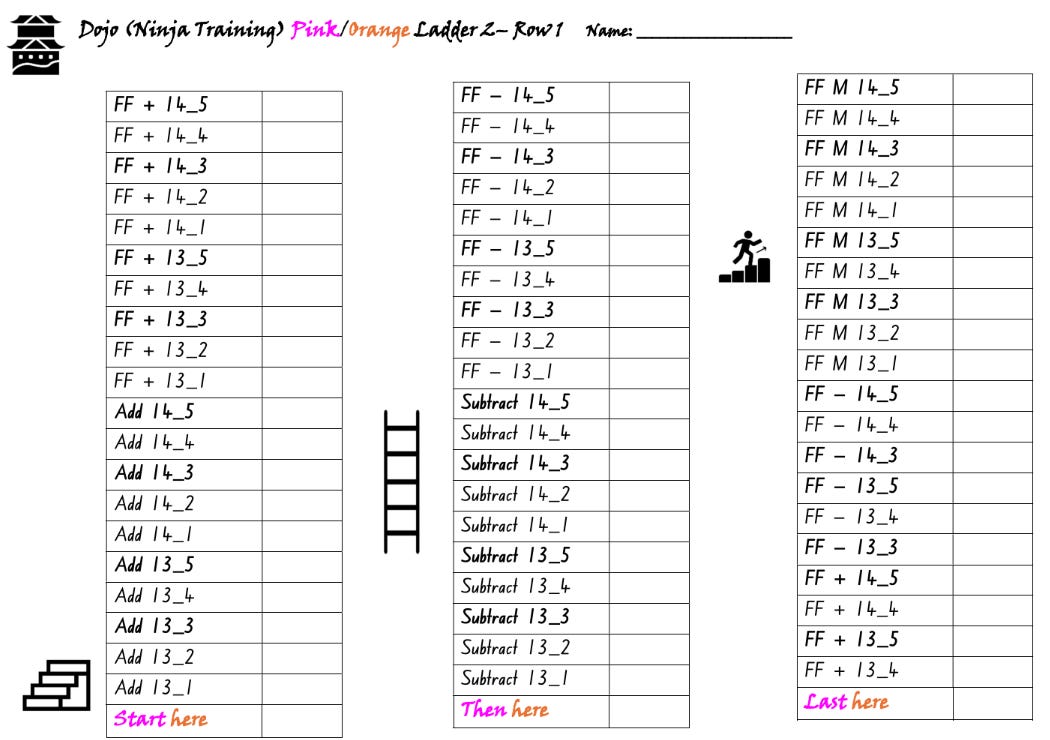
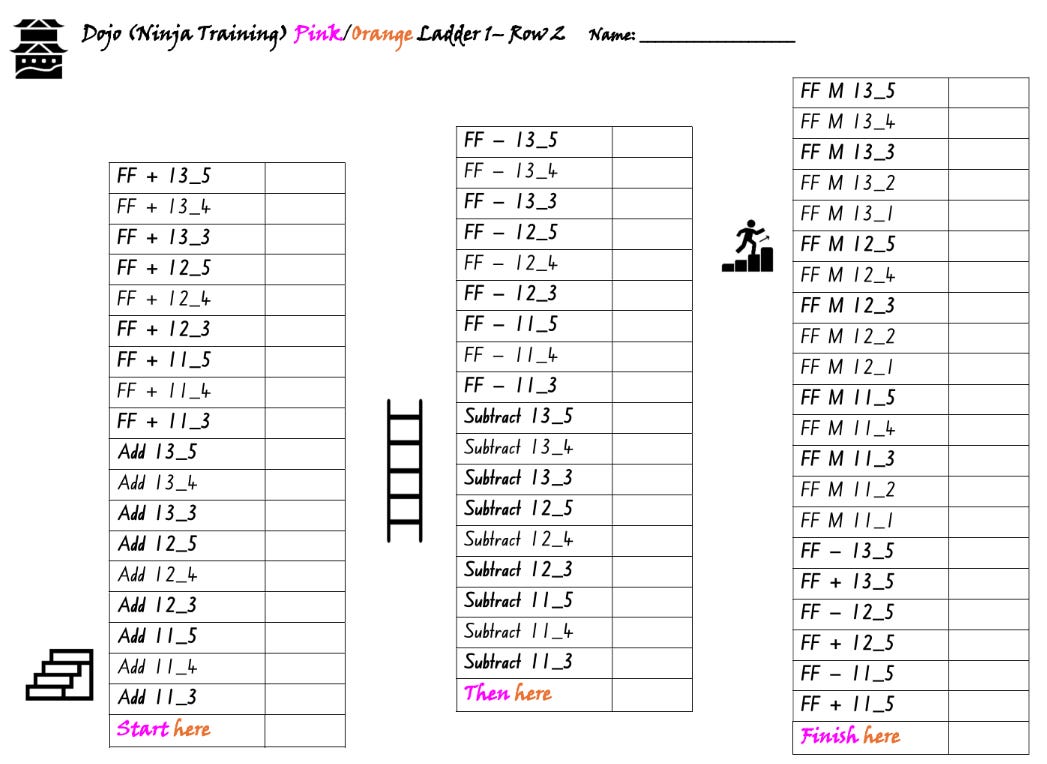
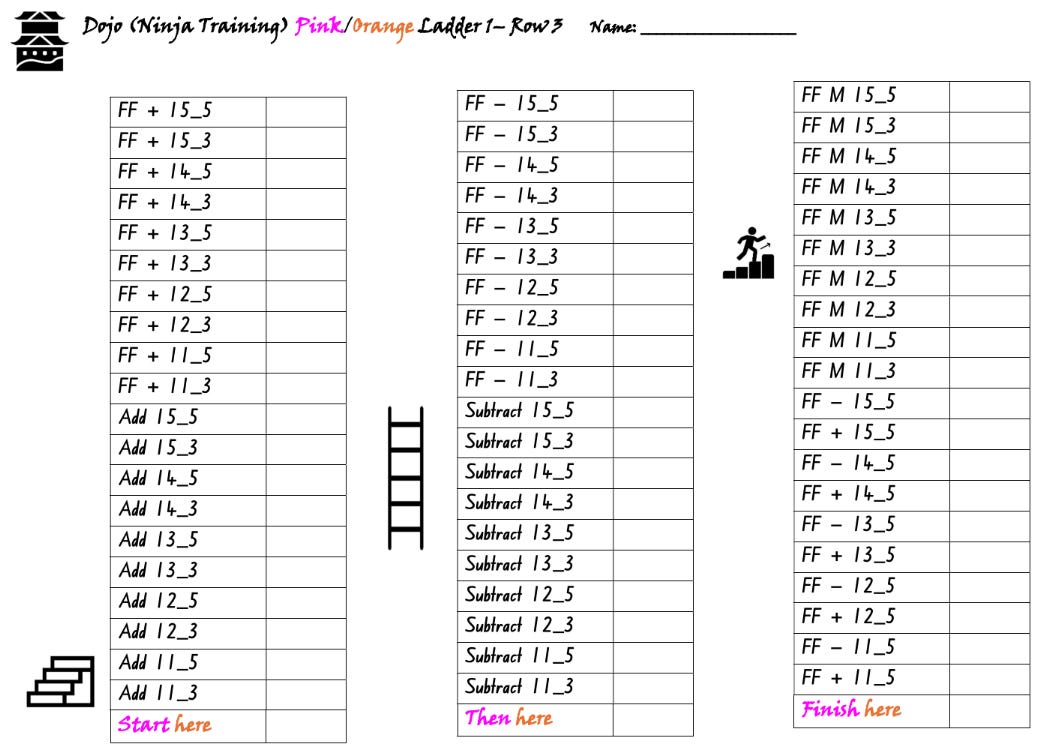
Problem solved right - that’s everything teachers could possibly need, job finished.

Why did I think that just giving teachers an overwhelming amount of resources would be enough? No idea, but golly that was short-sighted. If it took me about 2 terms with daily/weekly support from an experienced teacher, what on earth possessed me to try to try to shortcut that for the teachers I work with? Some of it is well-intentioned, thinking that other teachers are always more experienced and smarter than me. Some of it it directly the Curse of Knowledge - I know so much I forget what it’s like not to know. For the next few blogs, I’ll keep unpacking the worksheets and what I’ve learned about what NOT to do - and how I’m responding to this.